01

Our Work

Build community. Open networks. Challenge barriers.

People across the first-generation community know where opportunity breaks down: in the unanswered question, the missing introduction, or the rule no one explains. EdMobilizer turns that insight into convenings, networks, and coordinated advocacy.

Different forms. A consistent method: start with lived experience, organize across institutions, and make access less dependent on inheritance.

A shared approach

Listen closely. Build collectively. Leave something others can use.

The form follows the barrier: a summit when students need a national room, a coalition when institutions need pressure, and a network when the missing link is an introduction.

01

National convening

Founded 2014 · first summit 2015

1vyG
Community at scale
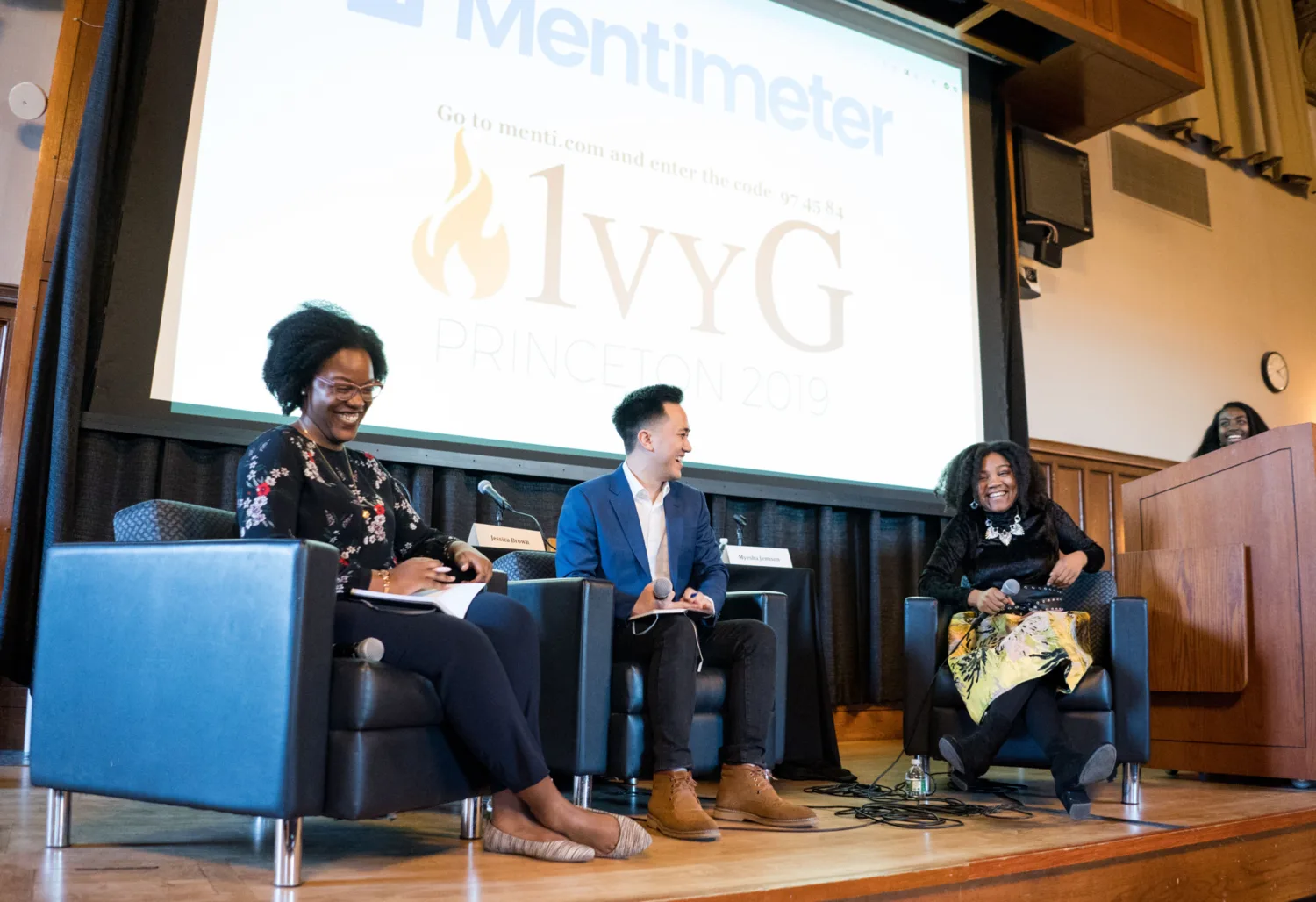
Three panelists laughing together on stage at the 2019 1vyG conference at Princeton

The context

At Brown, first-generation students recognized that the isolation and unwritten rules they were navigating were not theirs alone. The same questions were surfacing on campuses across the country.

The barrier
There was no national infrastructure for students to compare campus practices, share practical knowledge, and organize around common challenges.
The response
1vyG created a student-led summit that moved from campus to campus, combining candid peer exchange with workshops, speakers, and institutional dialogue.
The coalition
Campus organizers worked alongside first-generation student groups, university administrators, alumni, and national education leaders.
The result
The model reached six Ivy League host campuses, with regional gatherings at Duke and Stanford linking more local student leaders to the national network.
The larger lesson
The rotating-host model let each campus adapt the program without breaking the cross-campus network.
Explore the 1vyG history
02

Access campaign

2017

No Apologies

Removing barriers

The context

For low-income applicants, a fee can close off an option before an admissions office ever considers their potential.

The barrier
Existing waiver processes often depended on extra paperwork—or simply knowing that help was available.
The response
EdMobilizer organized at least 14 student councils and first-generation student groups around a direct ask: identify qualifying applicants and waive the fee automatically.
The coalition
The campaign paired the reach of student government with the firsthand perspective of first-generation organizers across institutions.
The result
Brown adopted an automatic application-fee waiver for qualifying low-income applicants, removing an avoidable step from the application process.
The larger lesson
An access policy only works when students can use it without first decoding the system.
Read the Brown Daily Herald report
03

Transparency campaign

2018

Full Disclosure

Making systems visible

The context

Legacy preference can shape who gains admission while remaining largely invisible to the public.

The barrier
Without consistent disclosure, students could neither compare institutional practice nor hold a grounded campus debate.
The response
Student groups at 12 colleges called on their institutions to publish, explain, and review how legacy preference operated.
The coalition
First-generation student organizations and student-government leaders turned a diffuse concern into a coordinated cross-campus campaign.
The result
At Brown, 81% of participating students voted for a review of legacy preference—a clear public mandate for scrutiny.
The larger lesson
Accountability begins with making the rules visible.
Read the Brown Daily Herald report
04

Coalition advocacy

Launched 2021

Leave Your Legacy

Coordinating voice

The context

Legacy preference rewards an inherited relationship to an institution—the very kind of advantage many first-generation applicants do not possess.

The barrier
Students and alumni could object on their own campuses, but had few ways to make that opposition visible across institutions.
The response
EdMobilizer and Education Reform Now created a public pledge for students and alumni to withhold donations while their colleges retained legacy preference.
The coalition
Hundreds of students and alumni across 30 colleges had joined by the time the Associated Press covered the campaign.
The result
The pledge gathered individual decisions into one public record, making opposition to legacy preference visible across campuses rather than isolated within them.
The larger lesson
A private objection can become institutional pressure when people act together.
Read the Associated Press report
05

Professional network

Introduced 2020

Next Frontier

Networks beyond campus

The context

Graduation does not erase the network gap; it moves it into hiring, mentorship, and professional advancement.

The barrier
Professional introductions and workplace knowledge often move through inherited networks that are less accessible to the first-generation community.
The response
Next Frontier created a free directory where first-generation community members and allies could find one another across career stages.
The coalition
D. E. Shaw & Co. and Sponsors for Educational Opportunity supported fundraising for the launch.
The result
It established a professional counterpart to 1vyG: a place for members of the first-generation community to be discoverable to one another.
The larger lesson
Economic mobility depends on access to relationships after college as well as during it.
Follow EdMobilizer’s evolution

Five initiatives. One organizing instinct.

Follow how a campus convening became a broader platform.

Explore our story